
Barn Owl Live Cam
Barn Owl Live Cam: A Rare Glimpse Into the Life of an Elusive Bird of Prey
Welcome to the North Carolina Wildlife Resources Commission’s Barn Owl Live Cam, where you can experience one of the state’s most elusive raptors up close and in real time. Our 24/7 live feed provides a rare opportunity to observe these fascinating nocturnal birds as they nest, hunt, and raise their young.
Other Views
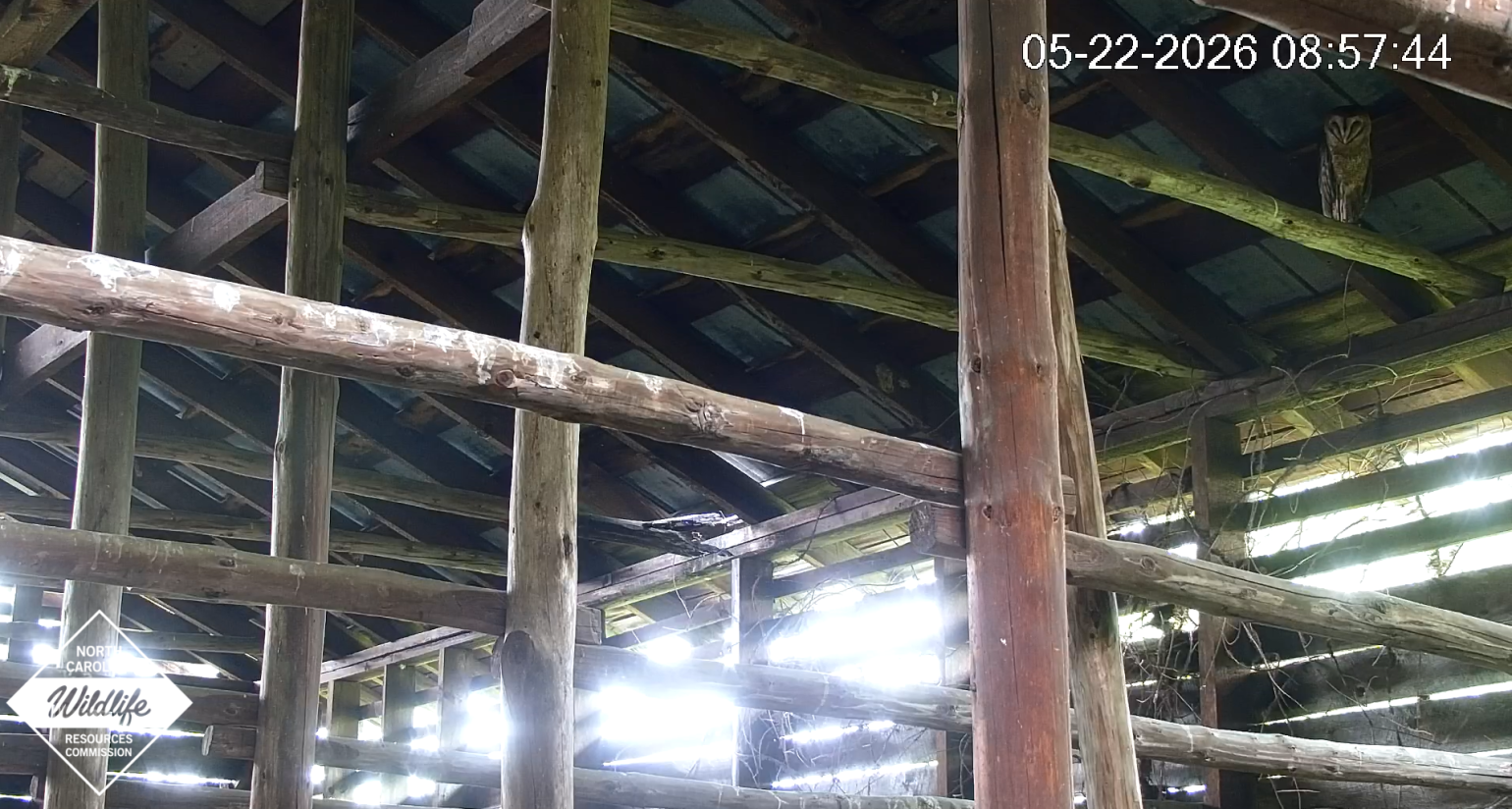
Check out “Other Views” on the task bar at the bottom of the live cam screen to see outside of the box. These cameras will become more active as the owls start to fledge and leave the box!
Bi-Weekly Update (6/8/26)
Just two days after our last bi-weekly update the youngest owlet passed. Owlet #5 likely passed due to a combination of factors including malnutrition, failure to thrive, competition from older siblings, drought‑related prey shortages, and additional pressure from a nearby nest competing for the same food resources. Its passing is not an uncommon occurrence in the barn owl kingdom.
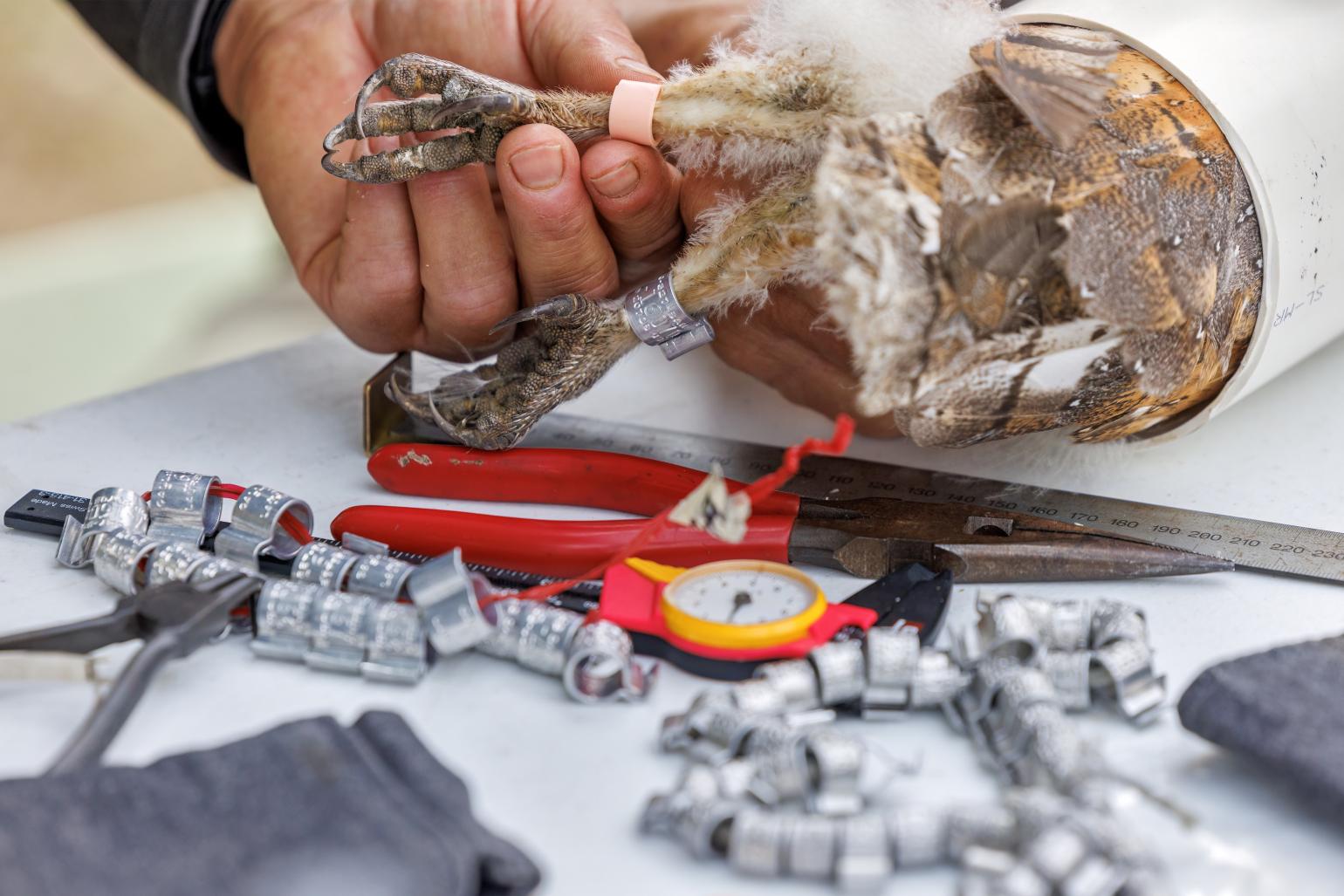
On June 2 we were able to safely and successfully band four owlets:
- #1 Female banded White/Dark Green weighing 568 grams (51 days)
- #2 Female banded White/Hot Pink weighing 549 grams (49 days)
- #3 Female banded White/Orange weighing 560 grams (48 days)
- #4 Male banded White/Light Pink weighing 312 grams (44 days)
The color bands, placed on the left leg, denote this specific box and year (white) and the individual owls (dark green, hot pink, orange, light pink). Federal bands were placed on the right leg.
Over the next two weeks the owls will start to leave the box to take short flights. You may see them fall, disappear, or start roosting outside of the box. This is all normal. Be sure to click "Views" to see inside of the barn where flights, climbs, and wing flaps will take place!
Bi-Weekly Update (5/25/26)
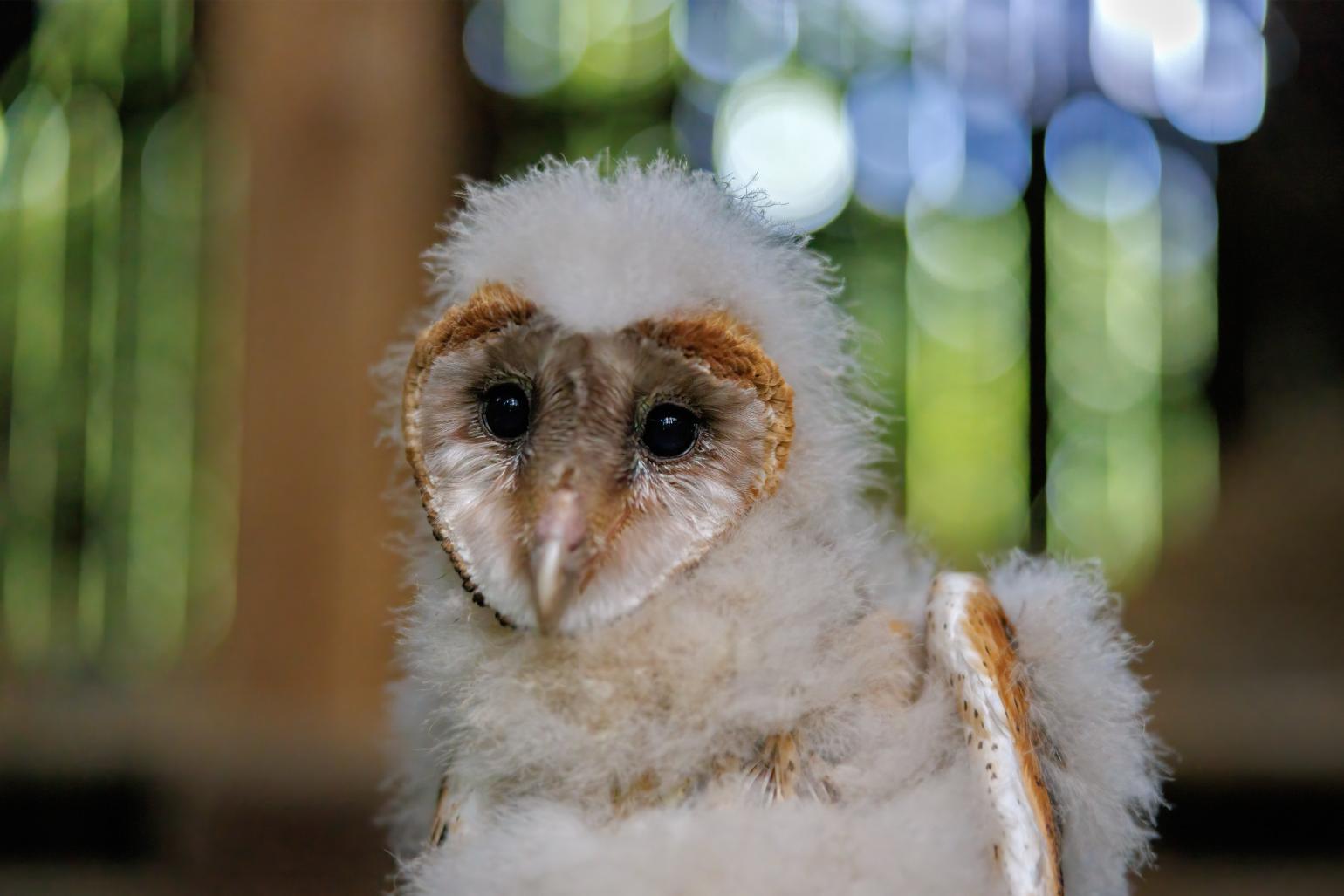
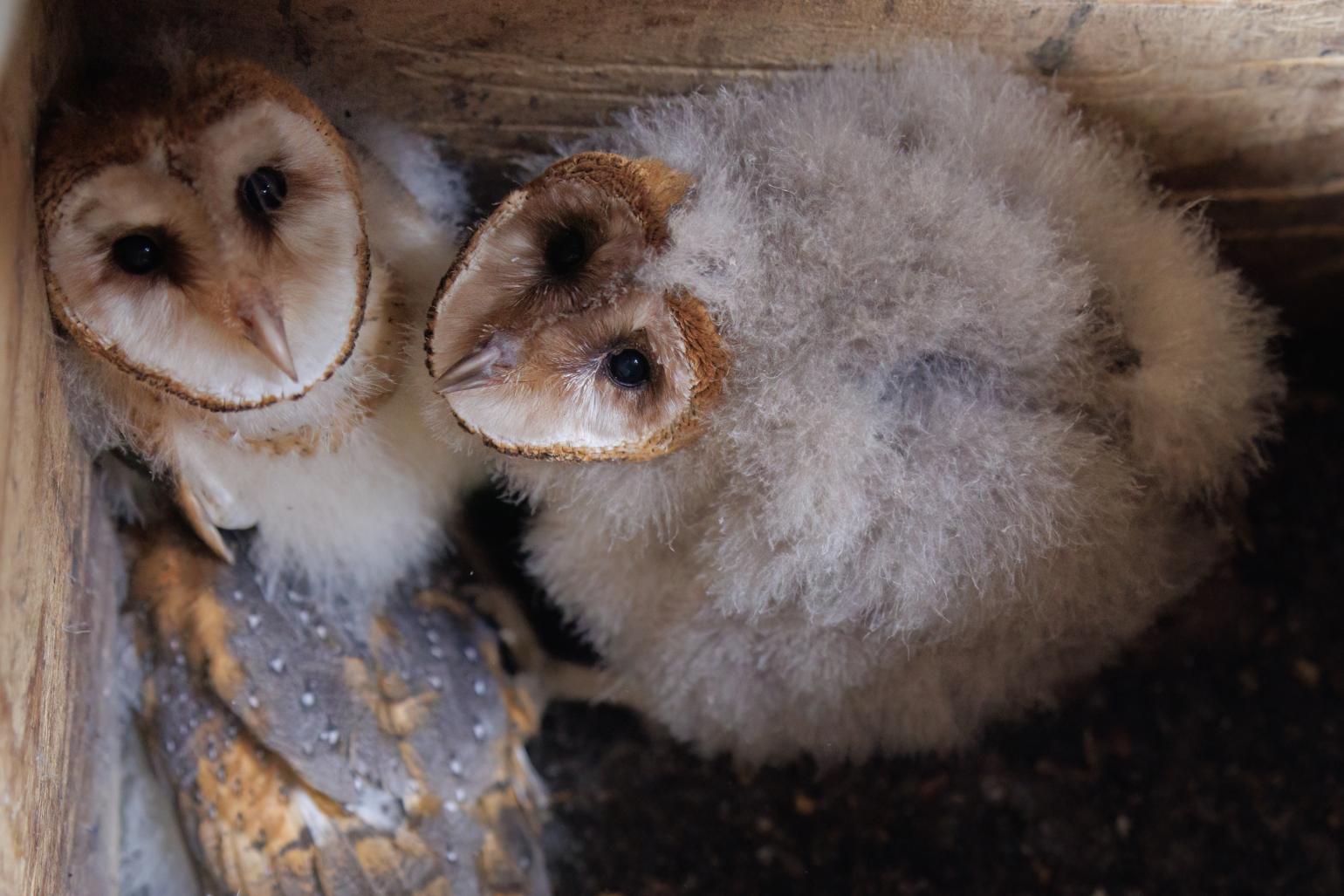
Although it looks tight in the nest box, our juvenile owls have plenty of space! You'll start to see flight feathers growing through the down and spots appearing around the head and chest. Dad and mom are still dropping several meals per night for their 5- to 6-week-olds. They'll seem to grow even faster now and by 7-10 weeks they'll be mostly feathered, but still have some wispy down on their heads and between their legs. We're getting close to full fledging with first flights typically being around 8- to 9-weeks. Stay tuned for a special update next week!
Bi-Weekly Update (5/11/26)
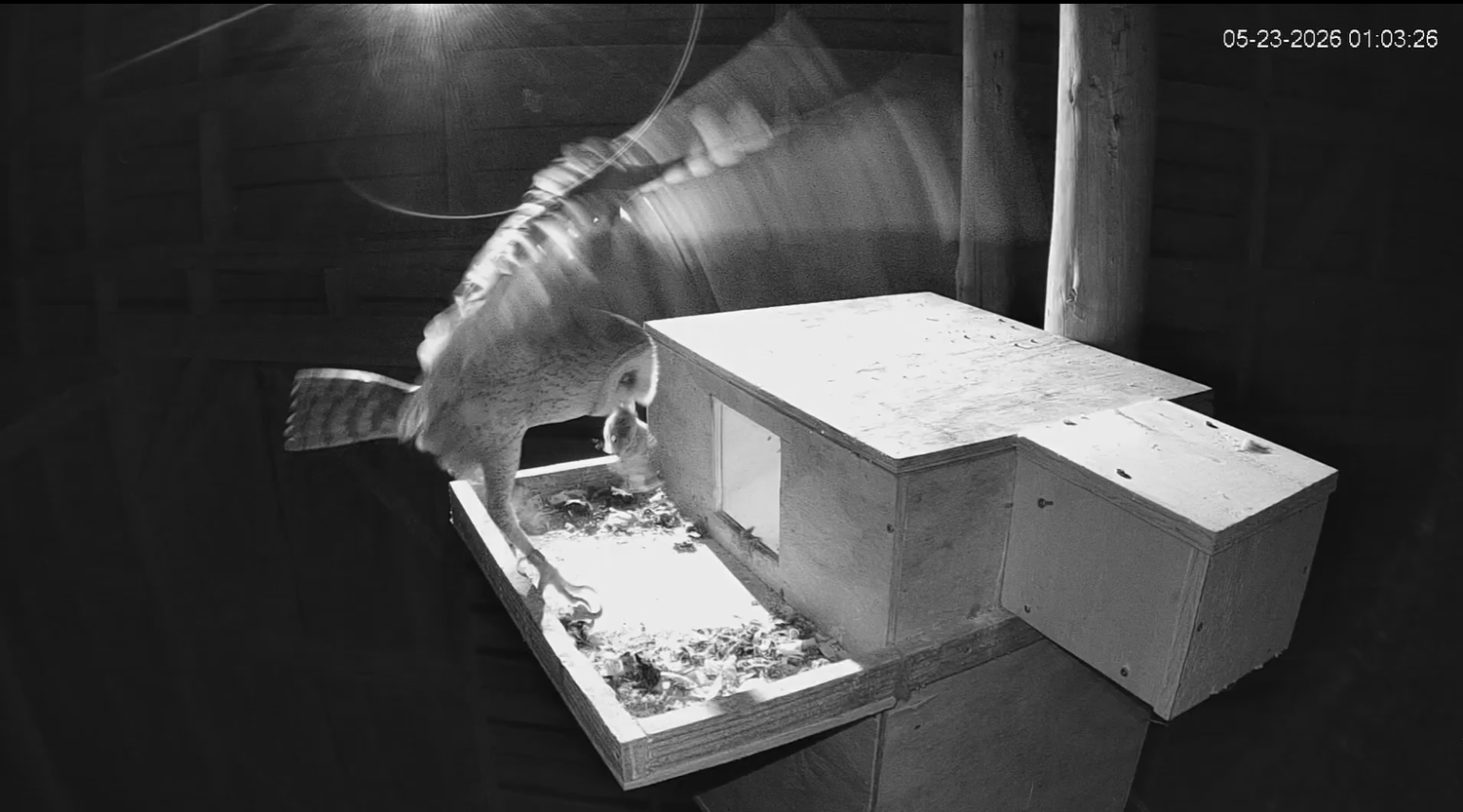
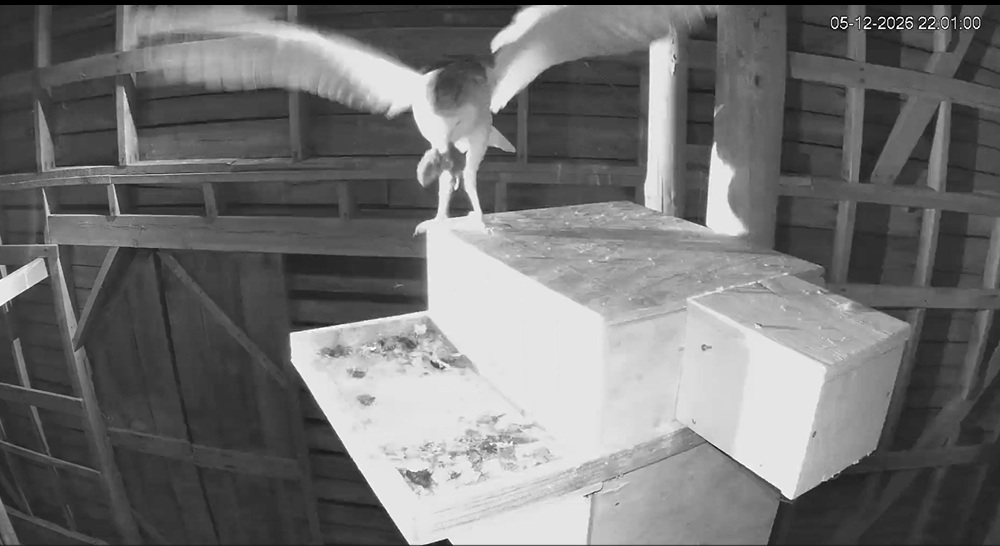
All 5 of the owlets are growing and eating well. Both parents are focused on hunting to meet the owlets’ increasing appetites. You may see mom less as she’s out hunting or roosted somewhere else and doesn’t need to brood the chicks as much. Dad and mom are dropping several meals per night for their 3- to 4-week-old babies.
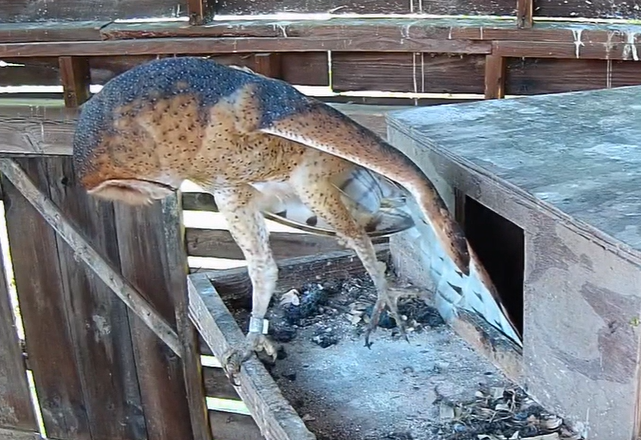
Enjoy these pictures from the past week of mom stretching and dad making a food delivery.
Tip: Barn owls are most active after sunset, so the best viewing is often at night when infrared lighting makes their secretive behaviors visible.
This live camera feed features wild barn owls in their natural habitat. Please be aware that these are wild animals and may exhibit natural behaviors that some viewers may find distressing. This includes, but is not limited to:
- Predation of prey animals
- Sibling aggression or competition
- Injury or death of chicks
- Lack of parental care in certain situations
We do not intervene in these natural processes. Our goal is to observe and learn from wildlife without disrupting their behavior or environment
Meet the Barn Owl (Tyto alba)
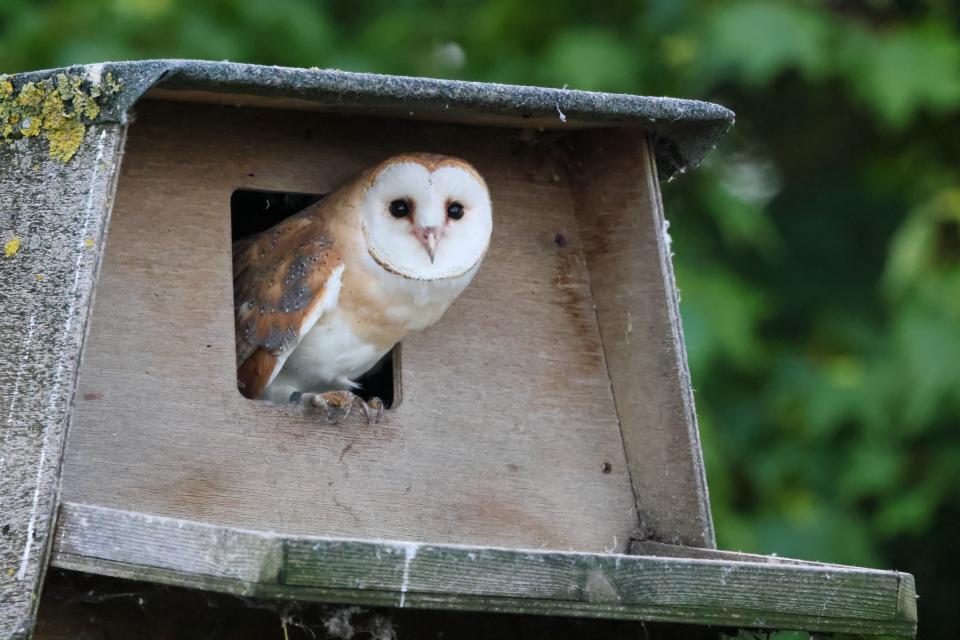
With its heart-shaped face, dark eyes, and ghostly white plumage, the barn owl is one of North Carolina’s most distinctive birds of prey. Unlike other owls, the barn owl doesn’t hoot - it screeches. Its call is a haunting, raspy sound often heard echoing through quiet farmland or open countryside at night.
Barn owls play an essential role in maintaining healthy ecosystems. A single barn owl family can consume more than 3,000 rodents in one breeding season, making them invaluable partners in natural pest control. They prefer open fields, pastures, and agricultural landscapes where prey like mice and voles are abundant.
A Conservation Success Story in Progress
While barn owls are found throughout North Carolina, their populations have declined in some regions due to habitat loss, changing agricultural practices, and fewer suitable nesting sites.
Through habitat enhancement projects and nest box installations, the NC Wildlife Resources Commission and its partners are working to give these graceful hunters a safe place to thrive.
This live camera is part of that effort - installed at an active nest box site to help us monitor barn owl activity and educate the public about their importance. The project helps biologists study nesting behaviors, chick development, and seasonal patterns while also allowing viewers to witness the wonders of the natural world from their own homes.
Did You Know?
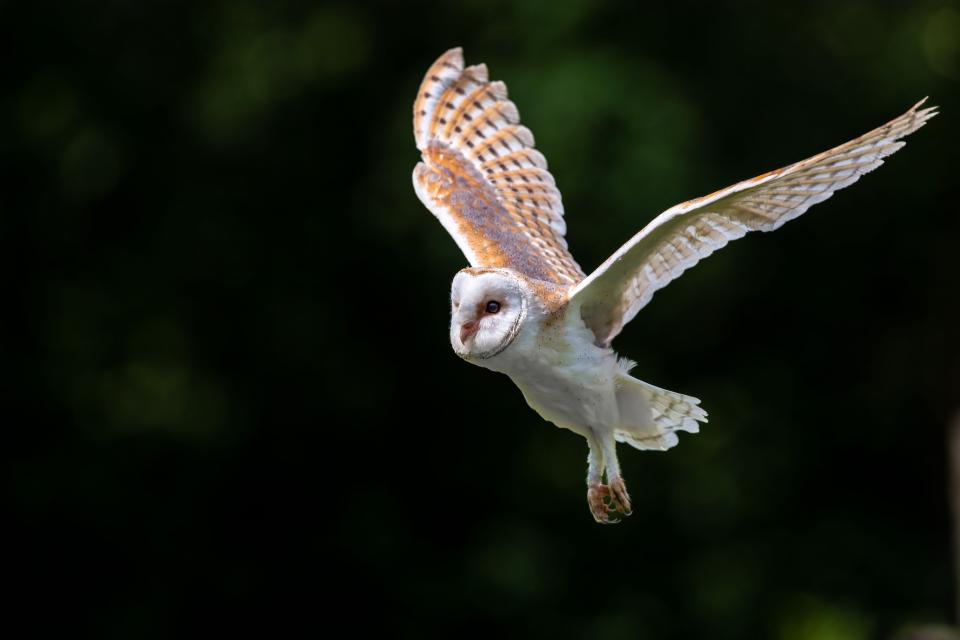
Silent Flyers: Barn owls’ feathers are specially adapted to muffle sound, allowing them to fly silently and ambush prey in complete darkness.
Family Life: Barn owls can lay anywhere from 2 to 18 eggs, with 4-8 being the average, depending on food availability various conditions. They do not build a nest, rather preferring to lay their eggs directly on piles of pellets or other debris.
Nocturnal Navigators: They rely almost entirely on hearing to locate prey - even in total darkness.
Statewide Residents: Barn owls can be found across North Carolina, most often in rural and agricultural areas, old barns, and nest boxes.
How You Can Help
You can support barn owl conservation in North Carolina by:
- Maintaining open grassy habitats and old trees on your property
- Installing nest boxes in suitable areas
- Reporting barn owl sightings to NC Wildlife and on iNaturalist
- Sharing this live cam to help others appreciate these remarkable birds
Every view, share, and conversation helps raise awareness and build appreciation for barn owls and the habitats that sustain them.
Contact Us
Please contact us by email with any questions.